

The Character of Wood
Every instrument begins with wood. Its density, grain, structure, and age all influence how it will respond, resonate, and mature over time.
In the workshop, we use carefully selected tonewoods chosen not only for their acoustic qualities, but for their stability and suitability for instrument making.
Wood is not simply a material. It is an active part of the instrument.

Soundboards — Cedar and Spruce
The soundboard, or top, is the primary voice of the instrument. Its role is to translate string energy into tone, projection, and character.
Traditionally, this is a choice between Cedar and Spruce, each with its own distinct qualities.
Cedar tends to respond quickly, producing a warm, immediate tone with strong overtones. It often feels open and expressive from the beginning, making it particularly appealing for players who favour a rich and responsive sound.
Spruce, by contrast, is typically brighter and more dynamic. It offers clarity, headroom, and structural strength, and continues to develop in character over time as the instrument matures.
Both are excellent tonewoods. The choice is not about better or worse, but about the type of response and tonal character desired. As part of the course, students are introduced to the differences between these woods in the workshop, where they can be seen, handled, and discussed before any final decisions are made.



Back and Sides
For first time builders, the traditional and recommended choice for back and sides is Indian Rosewood.
Indian Rosewood has long been regarded as one of the most dependable and acoustically responsive tonewoods used in guitar making. It offers depth, clarity, and strong overtone content, contributing to a full and balanced sound.
Beyond its tonal qualities, it is also particularly well suited to students learning the craft. It bends reliably, works cleanly with hand tools, and provides structural stability during the building process. These qualities make it an ideal material for developing both skill and confidence.
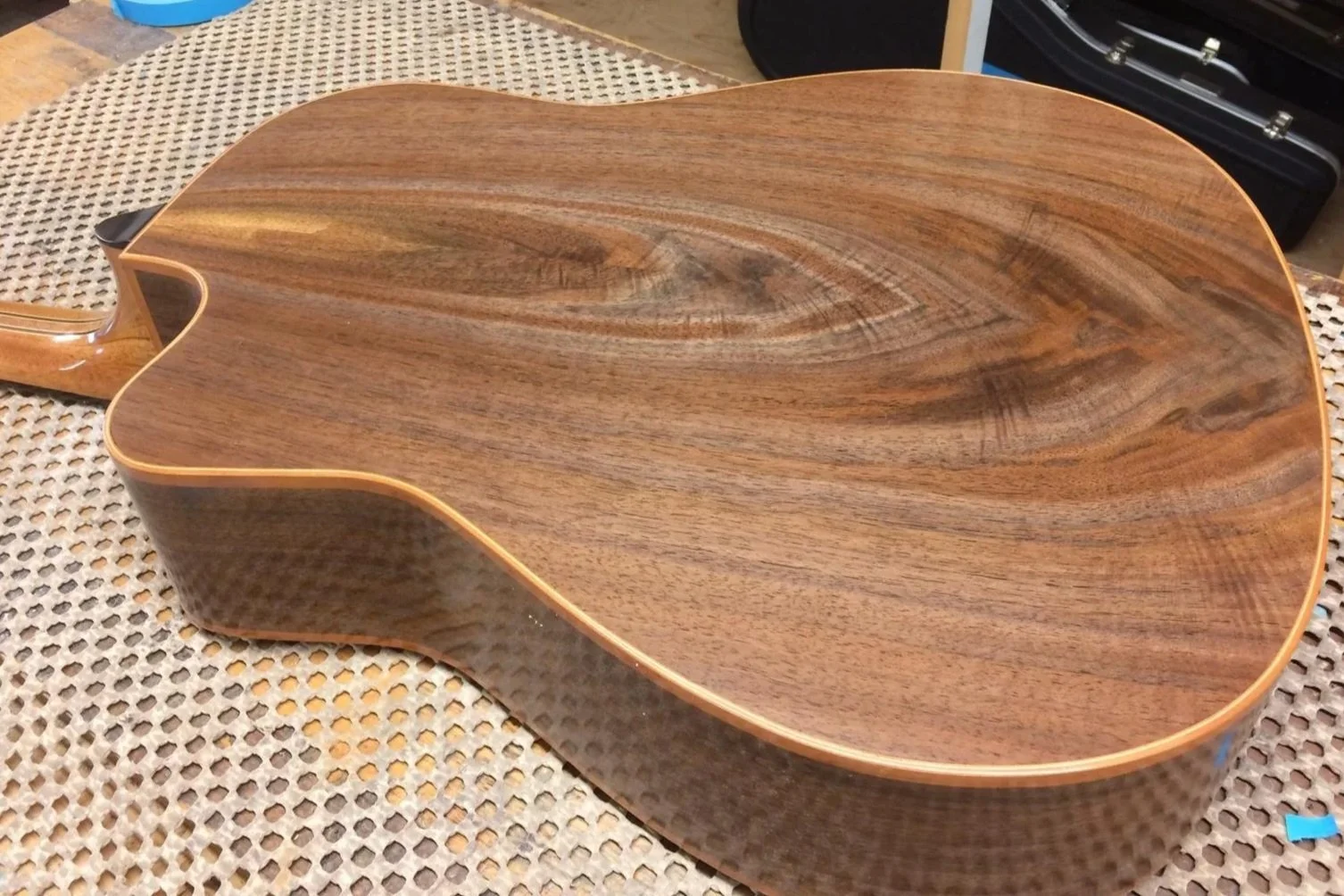
Visually, Indian Rosewood is consistently striking. Its deep colour and distinctive grain patterns produce an elegant finish that complements both cedar and spruce soundboards beautifully.
That said, other traditional woods such as Walnut and Mahogany are also excellent choices. Each brings its own tonal character and aesthetic appeal, and these options can be discussed in the workshop once students are familiar with the building process and material behaviour.
Indian Rosewood remains the most dependable and traditional starting point, but thoughtful alternatives are always part of the conversation.
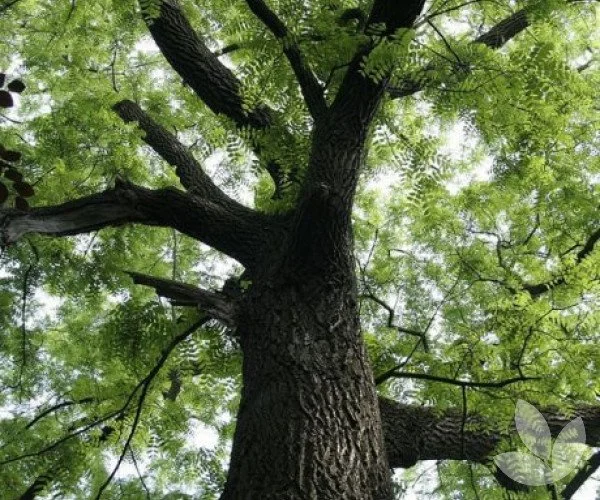
While the soundboard, back, and sides shape much of an instrument’s voice, a number of other carefully chosen woods contribute to its strength, balance, and longevity.
Other Woods and Their Roles
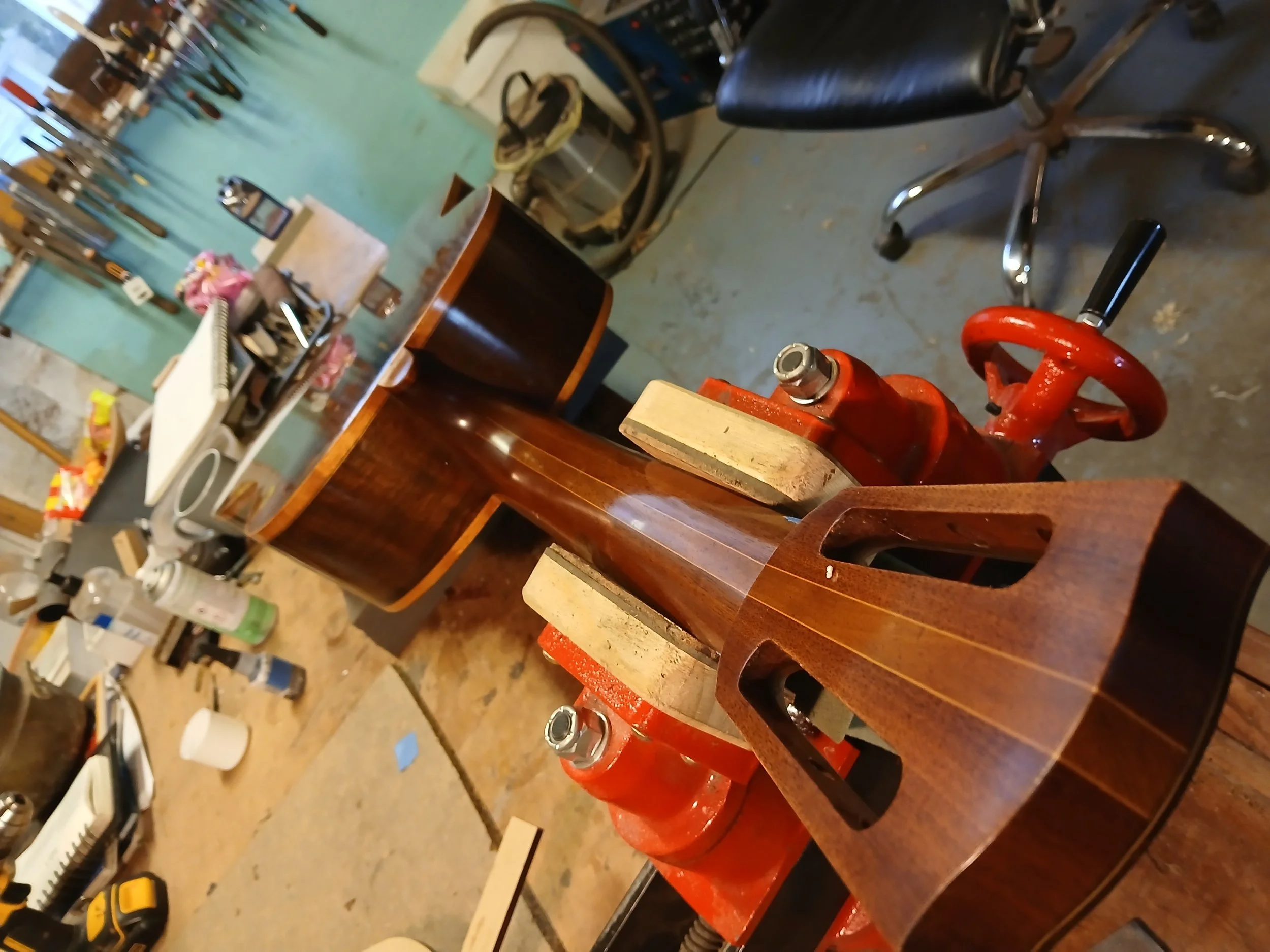
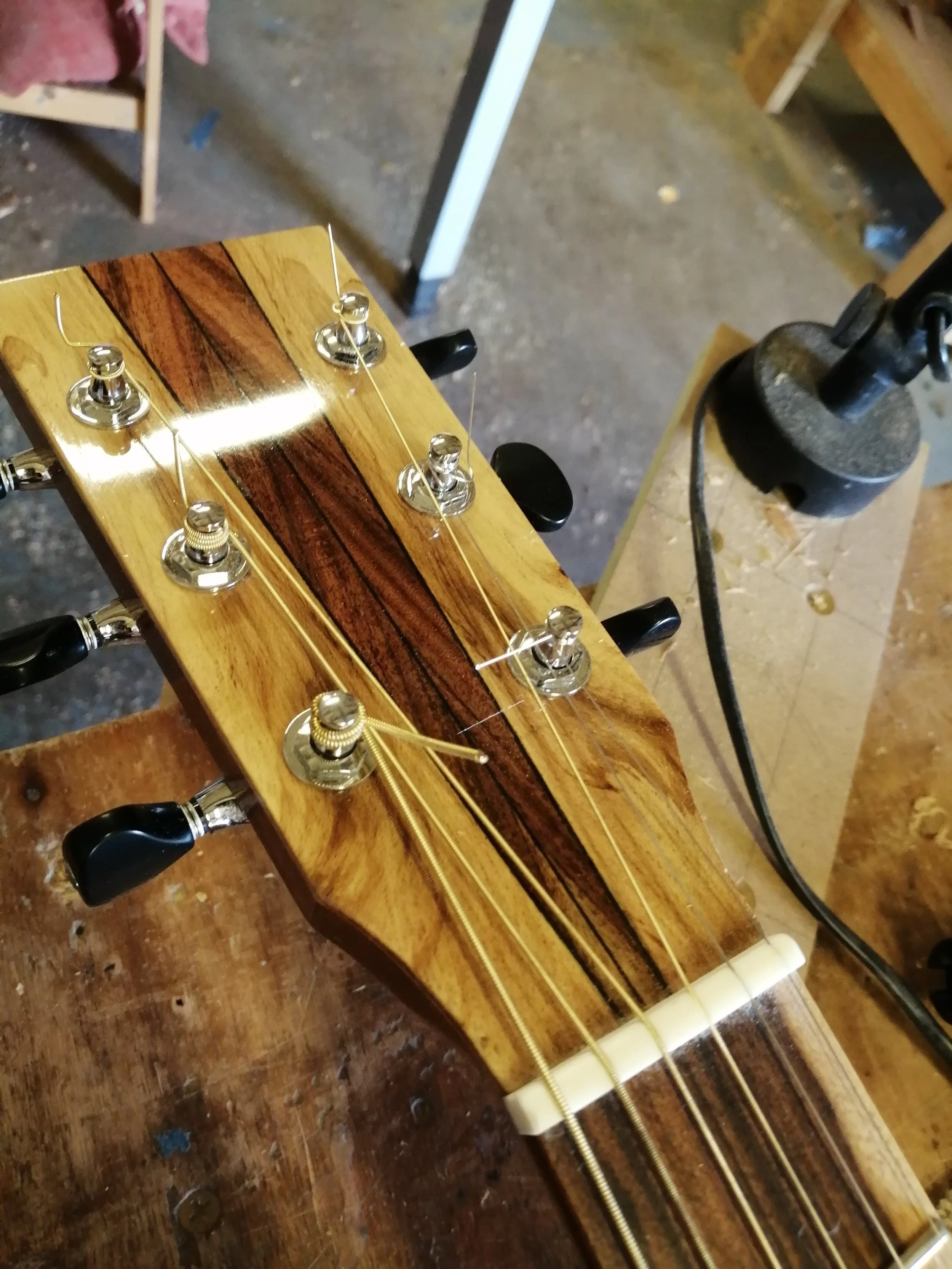
Necks are typically crafted from stable, straight grained woods such as Mahogany or Spanish Cedar. These materials offer strength without excessive weight, helping to maintain balance and playability over time.
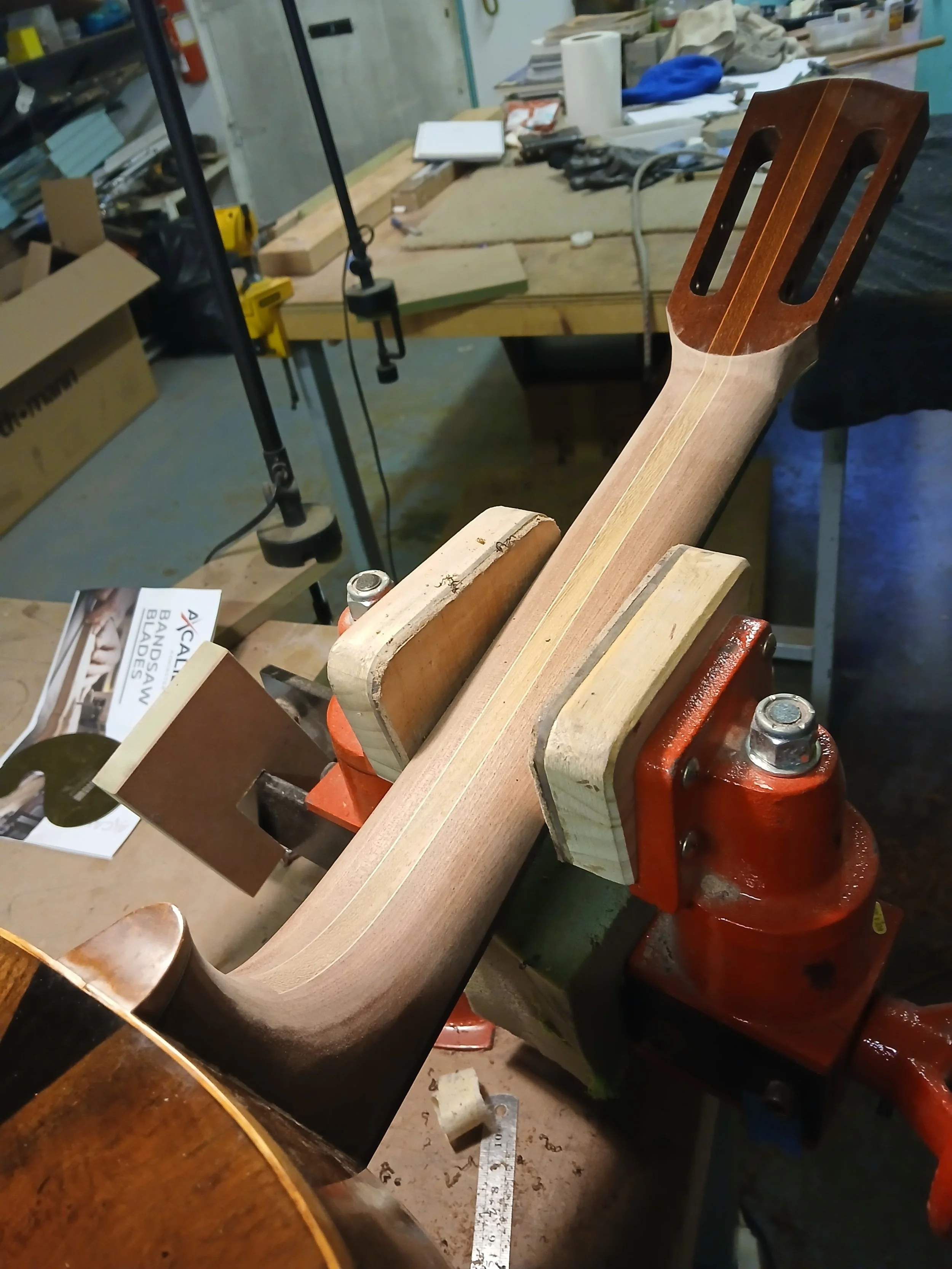
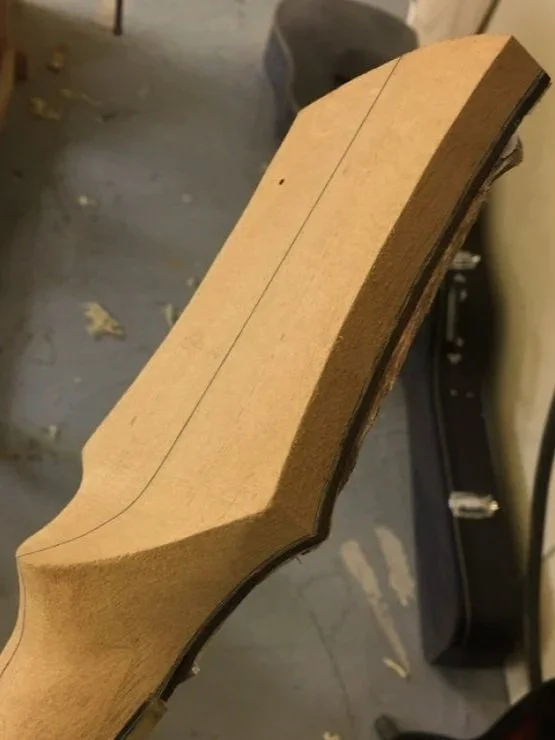
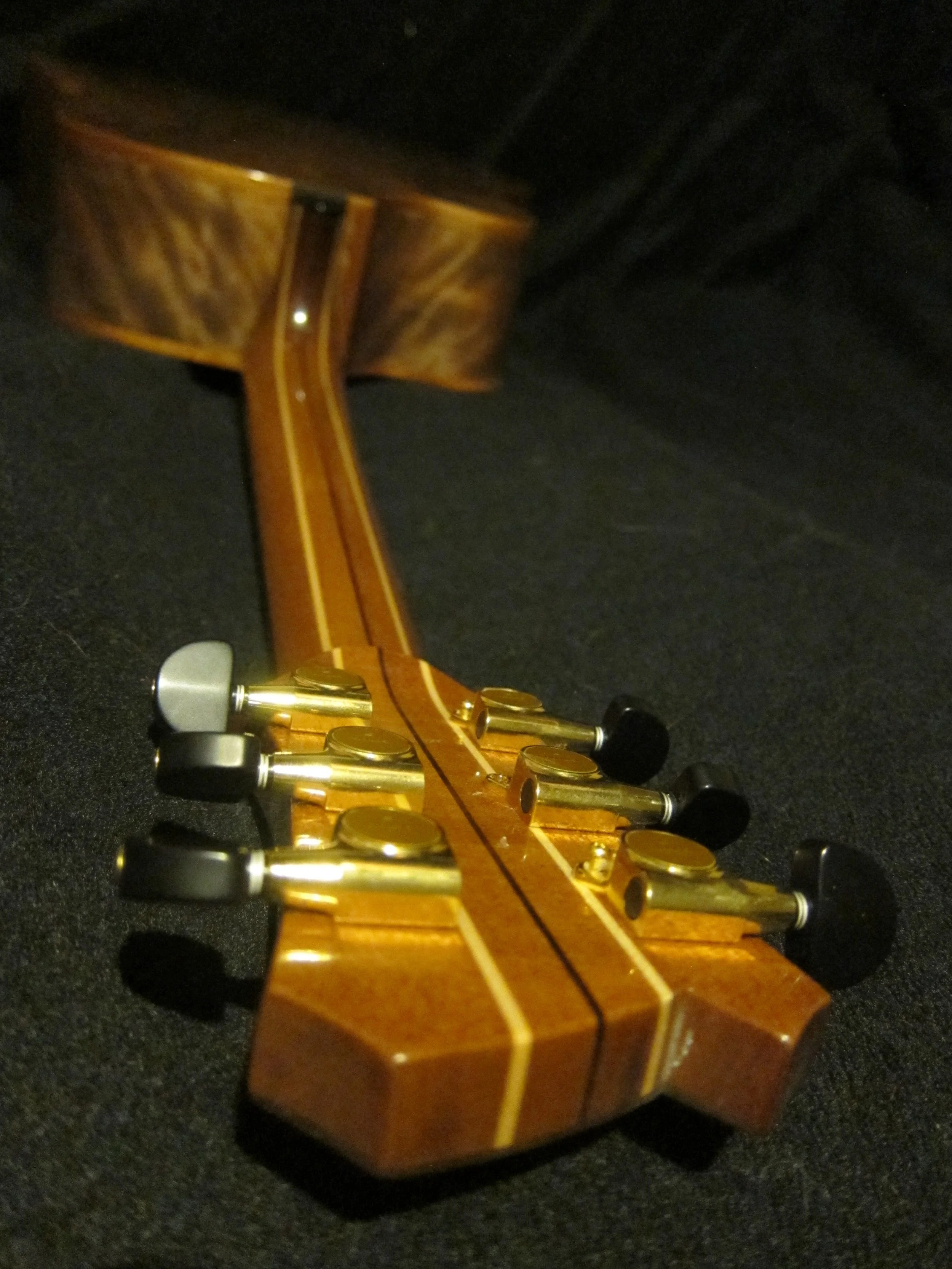
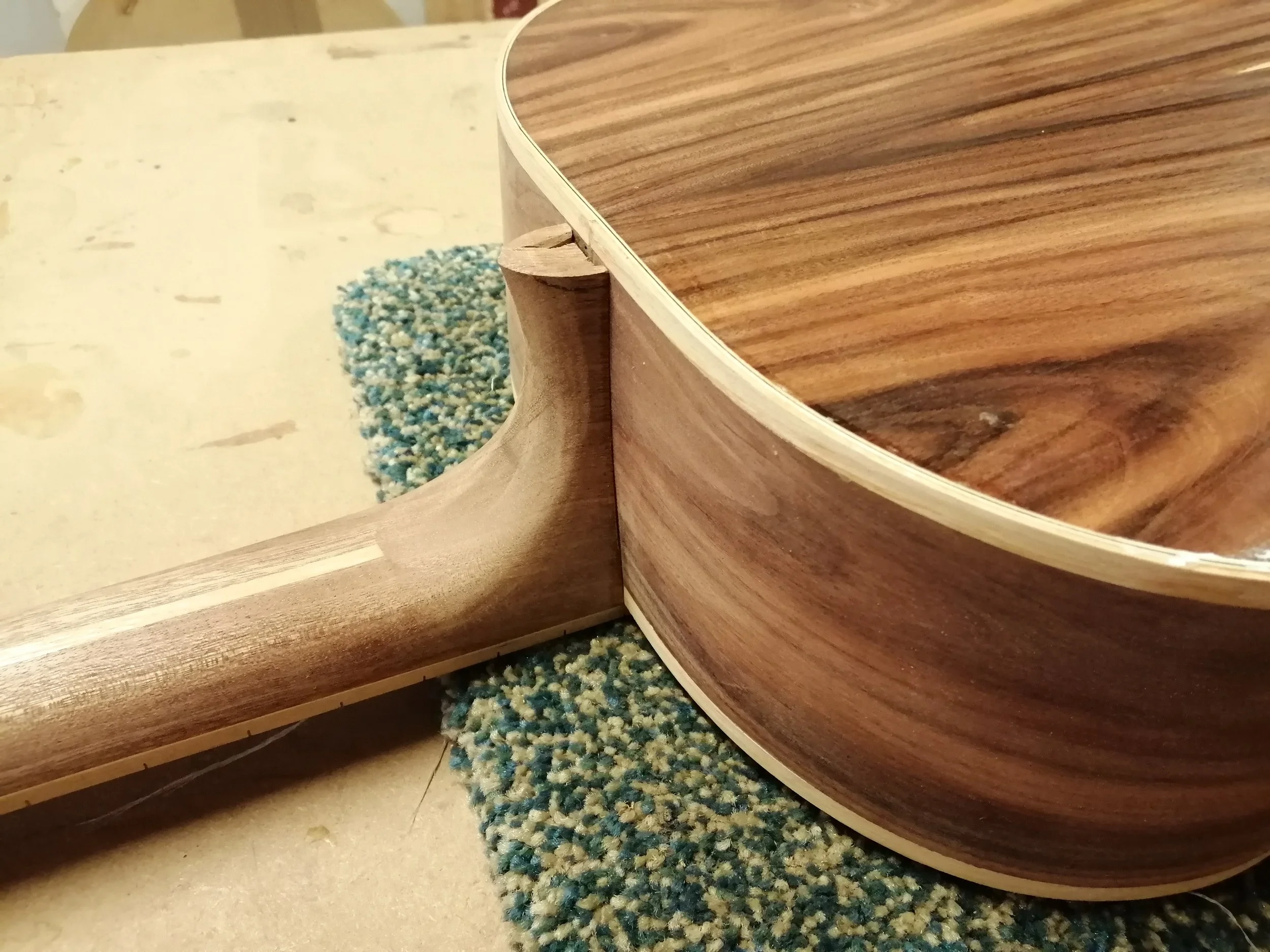
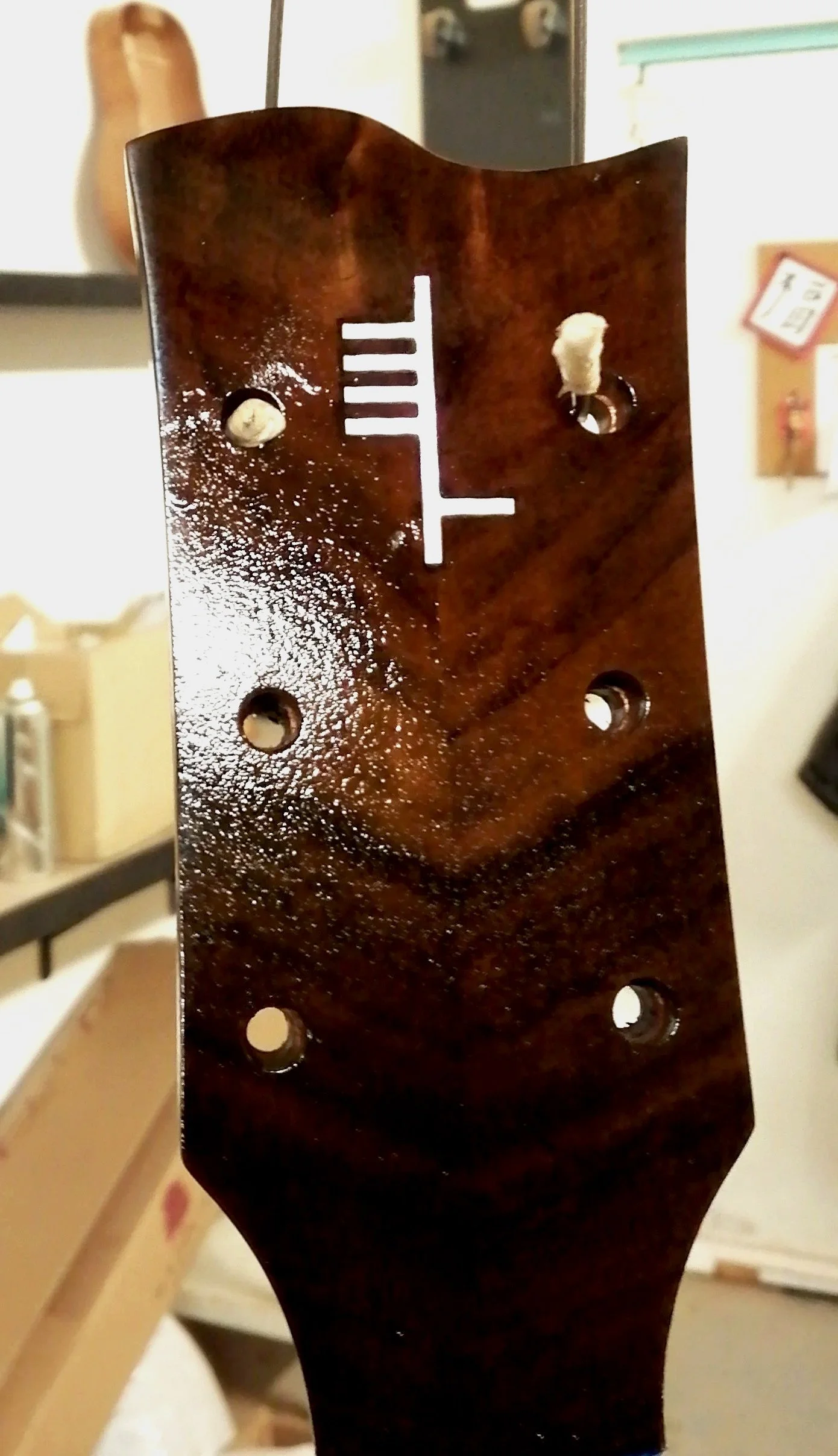
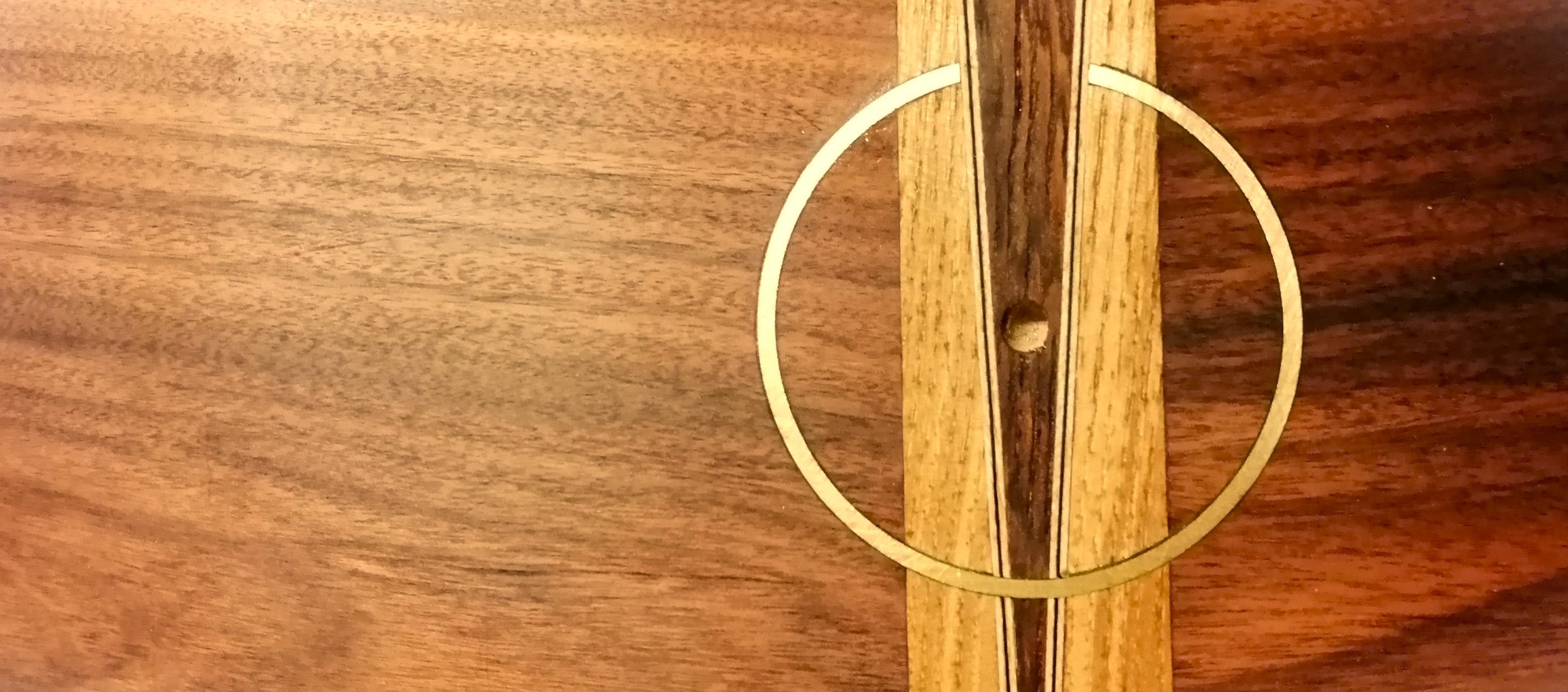
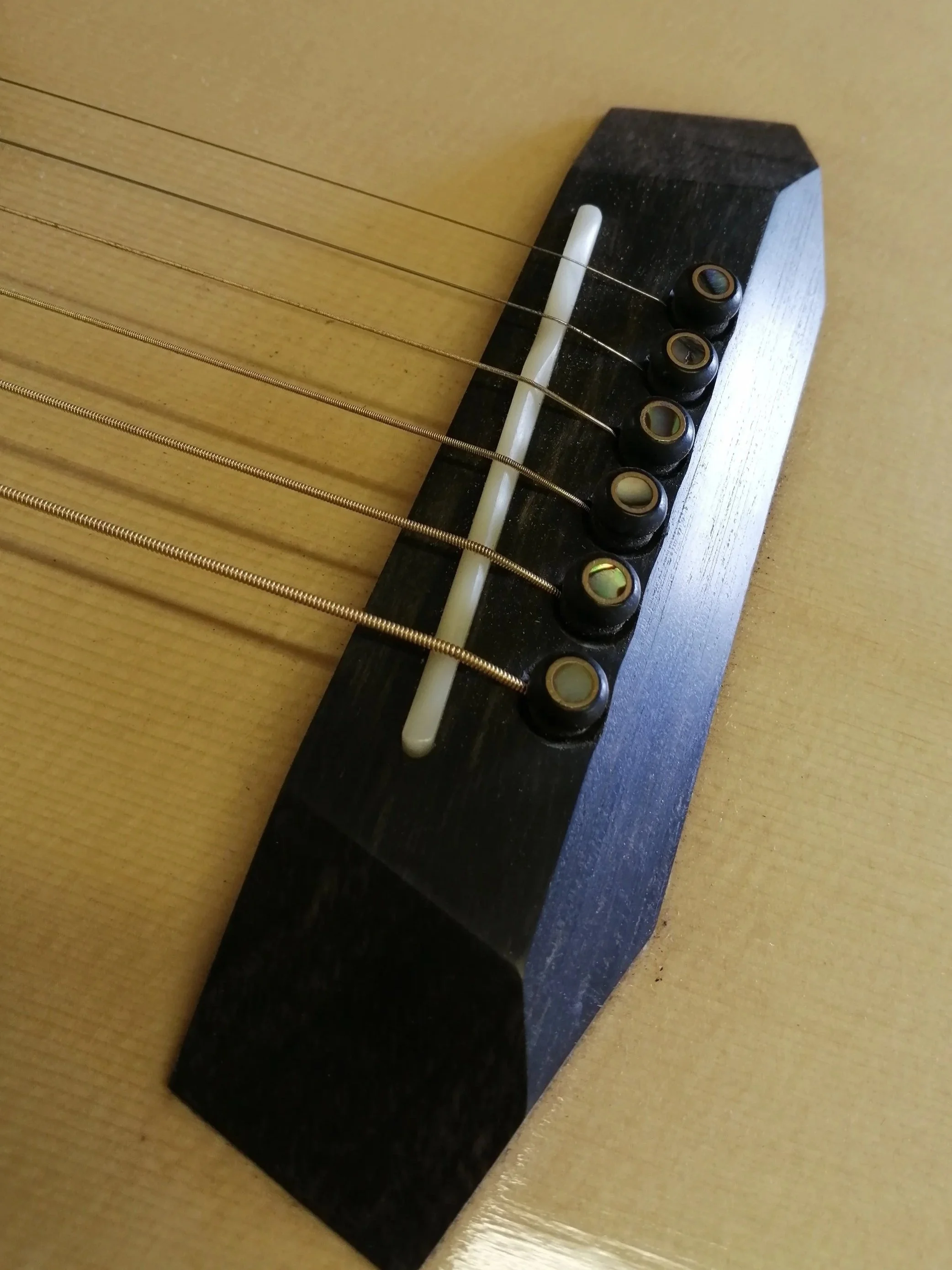
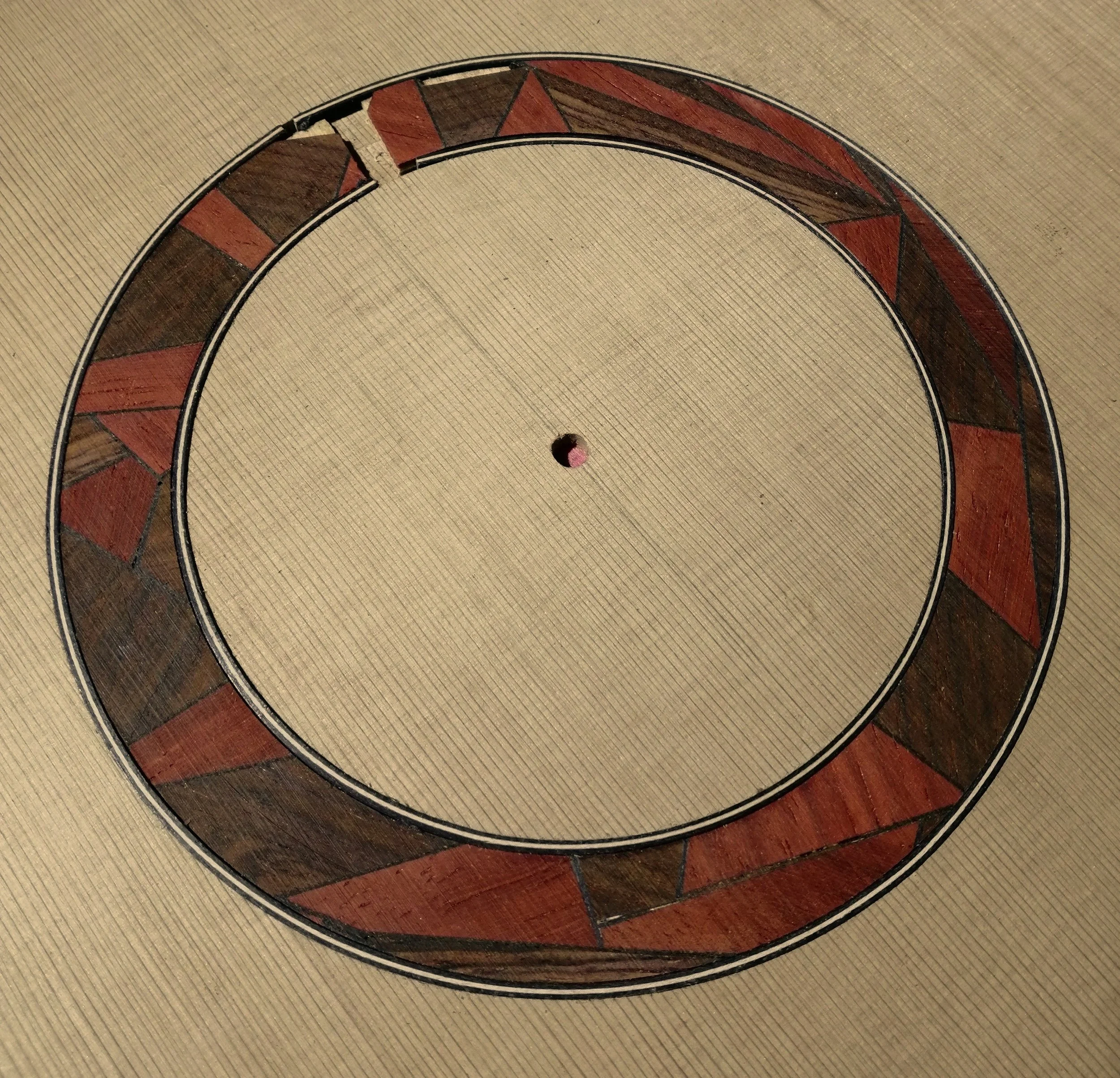
Bindings and Decorative Elements may use contrasting hardwoods to frame and protect the instrument’s edges, whilst also adding subtle visual refinement. Each component is selected not only for appearance, but for structural integrity, workability, and long term stability. Together, these materials create an instrument that is both expressive and enduring
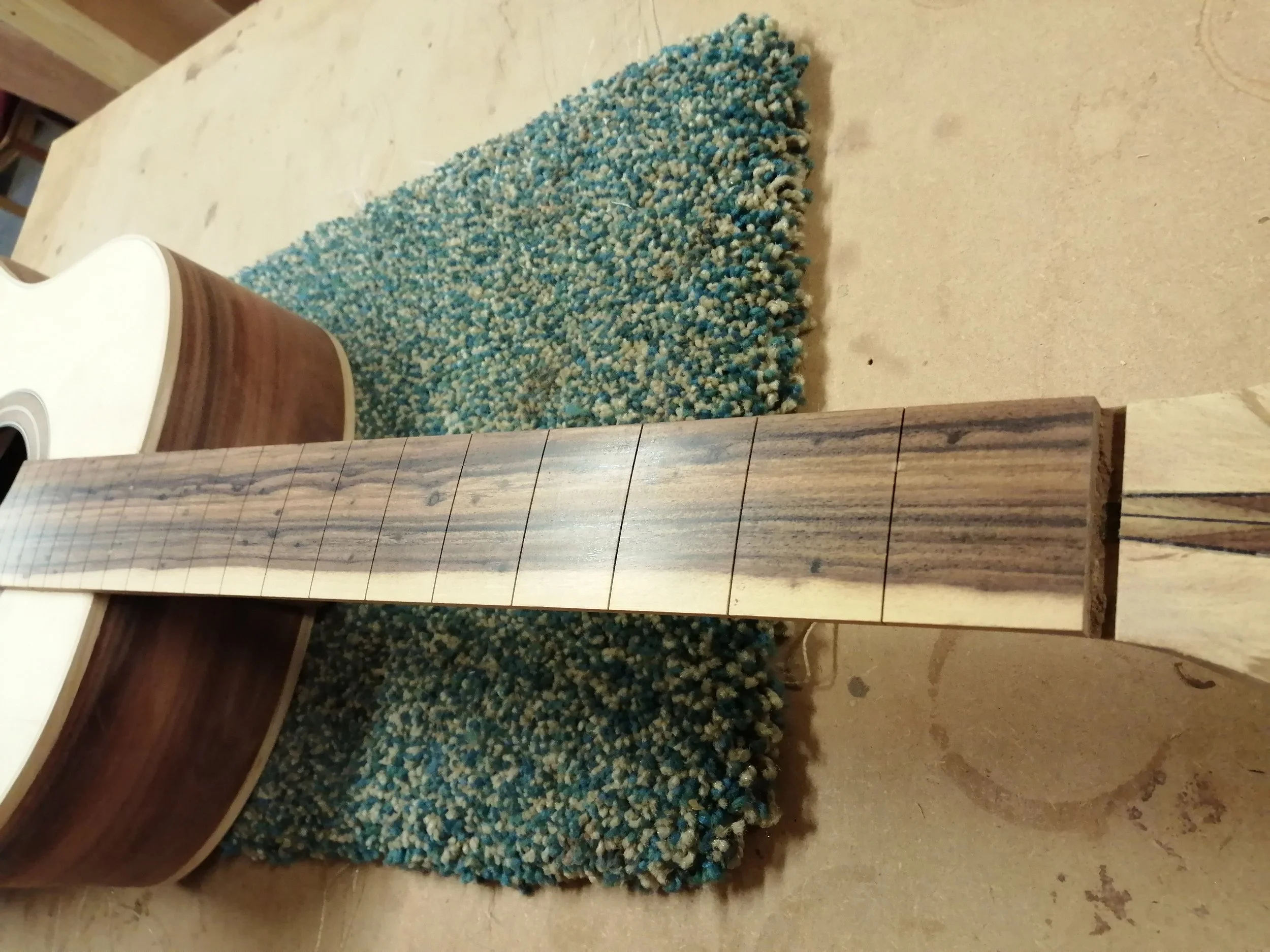
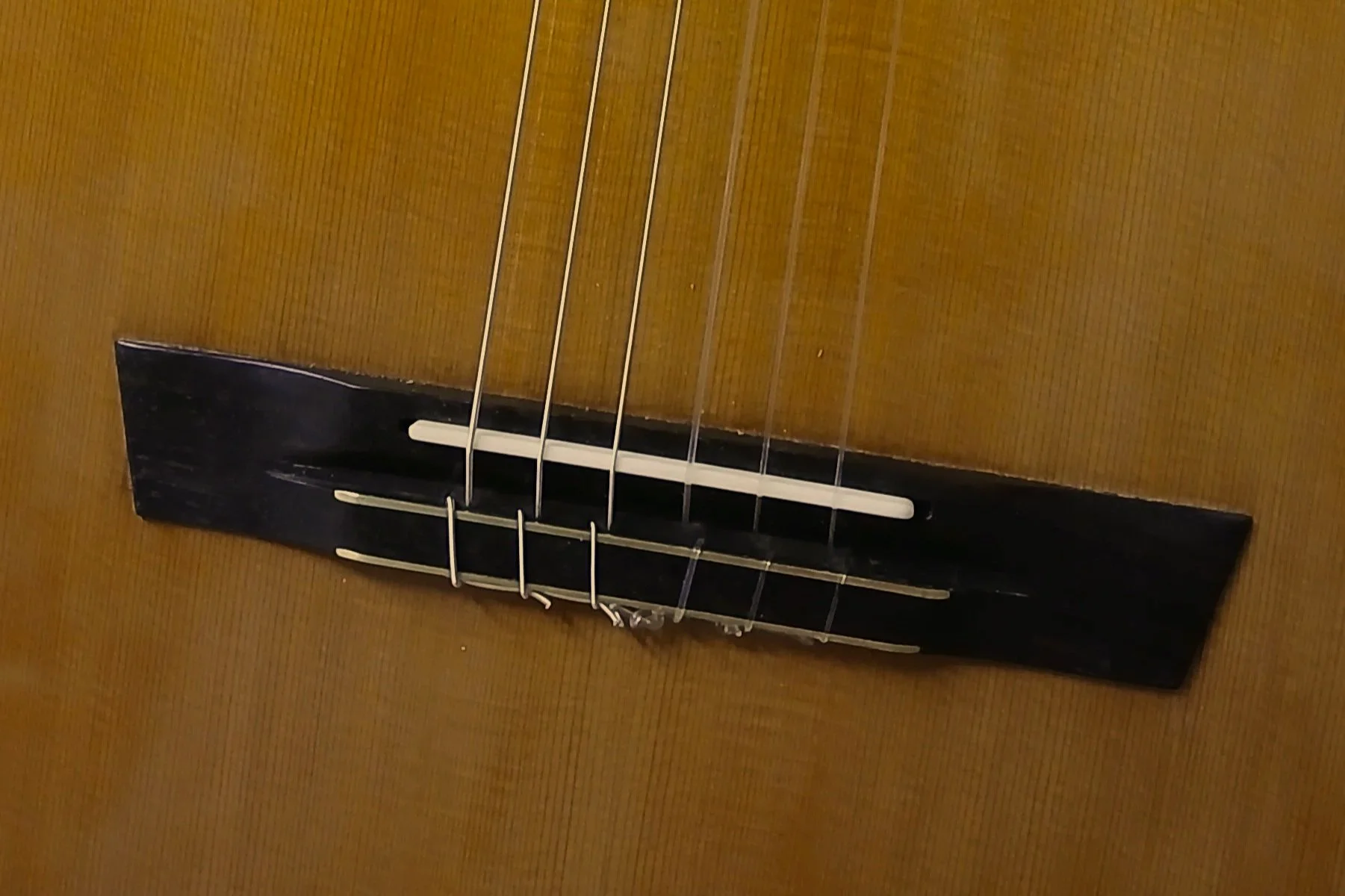
Fingerboards and Bridges are commonly made from dense hardwoods such as Ebony or Rosewood. Their hardness and durability allow them to withstand years of playing while contributing clarity and articulation to the instrument’s tone.
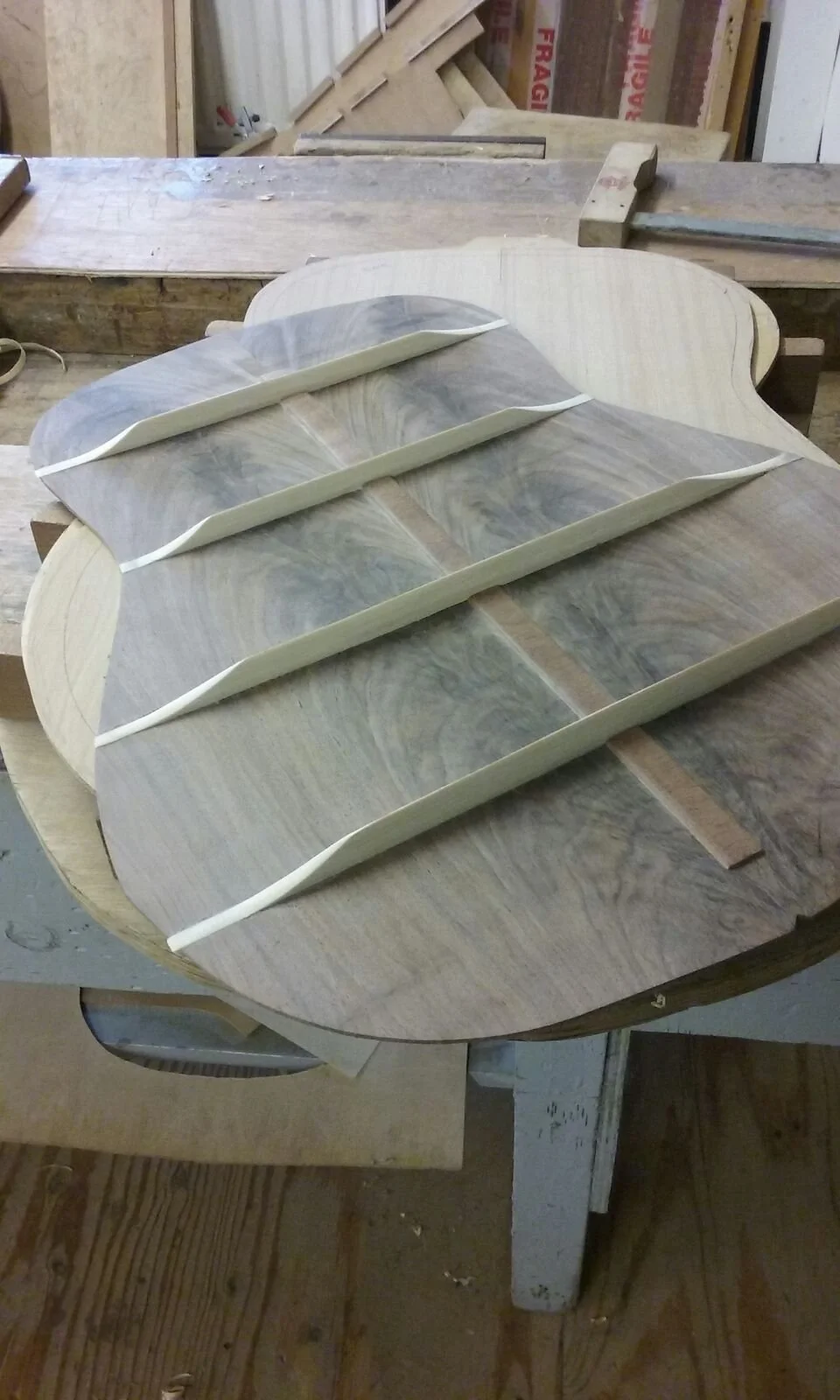
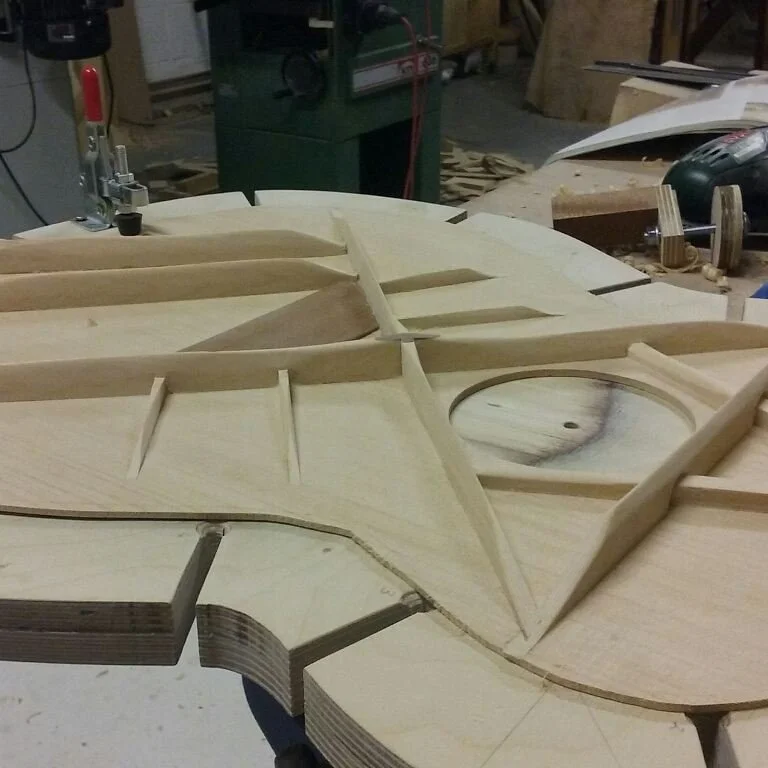
Internal Bracing is usually formed from lightweight yet strong Spruce. Though largely unseen, this structure plays a crucial role in shaping the responsiveness and character of the instrument.
The finish applied to an instrument plays a significant role in both its appearance and its tonal response. A well applied finish should protect the wood while allowing it to resonate as freely as possible.
In the workshop, traditional hand applied finishes are used, with particular emphasis on French polish.
Finishing Methods
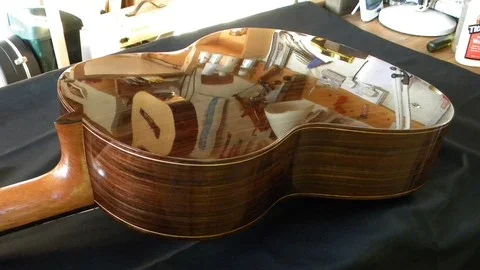
French polish, applied using shellac by hand, has long been regarded by many as one of the finest finishes available for tone. Its lightness and flexibility allow the instrument to respond with clarity and sensitivity, making it especially valued on classical and traditionally built instruments. For generations, it has been associated with high quality craftsmanship and careful, patient work.
Students are taught the French polishing process in a clear and practical way, removing much of the mystery that often surrounds it. The aim is not simply to apply a finish, but to understand how and why it works, and how it contributes to the overall voice of the instrument.
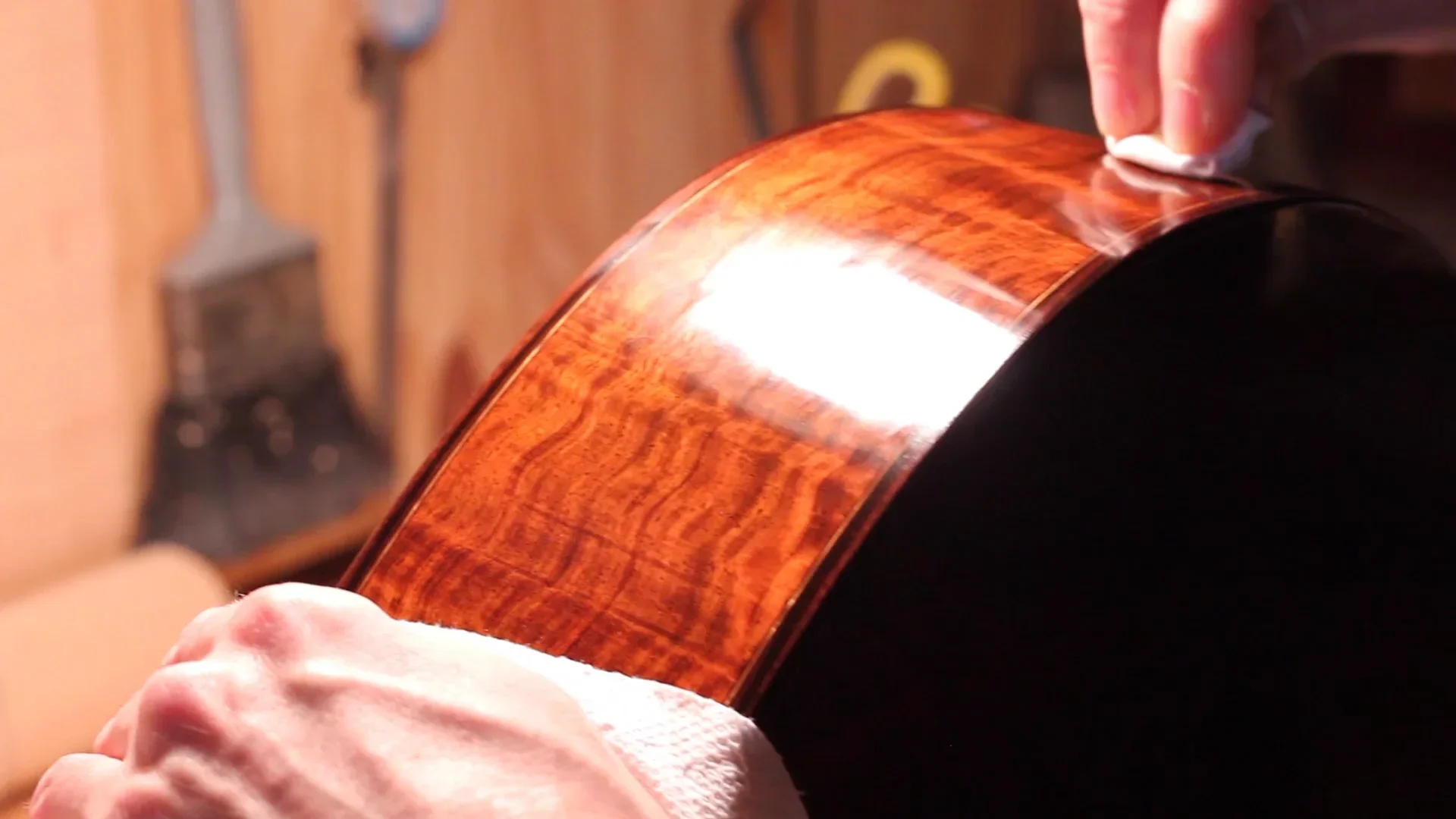
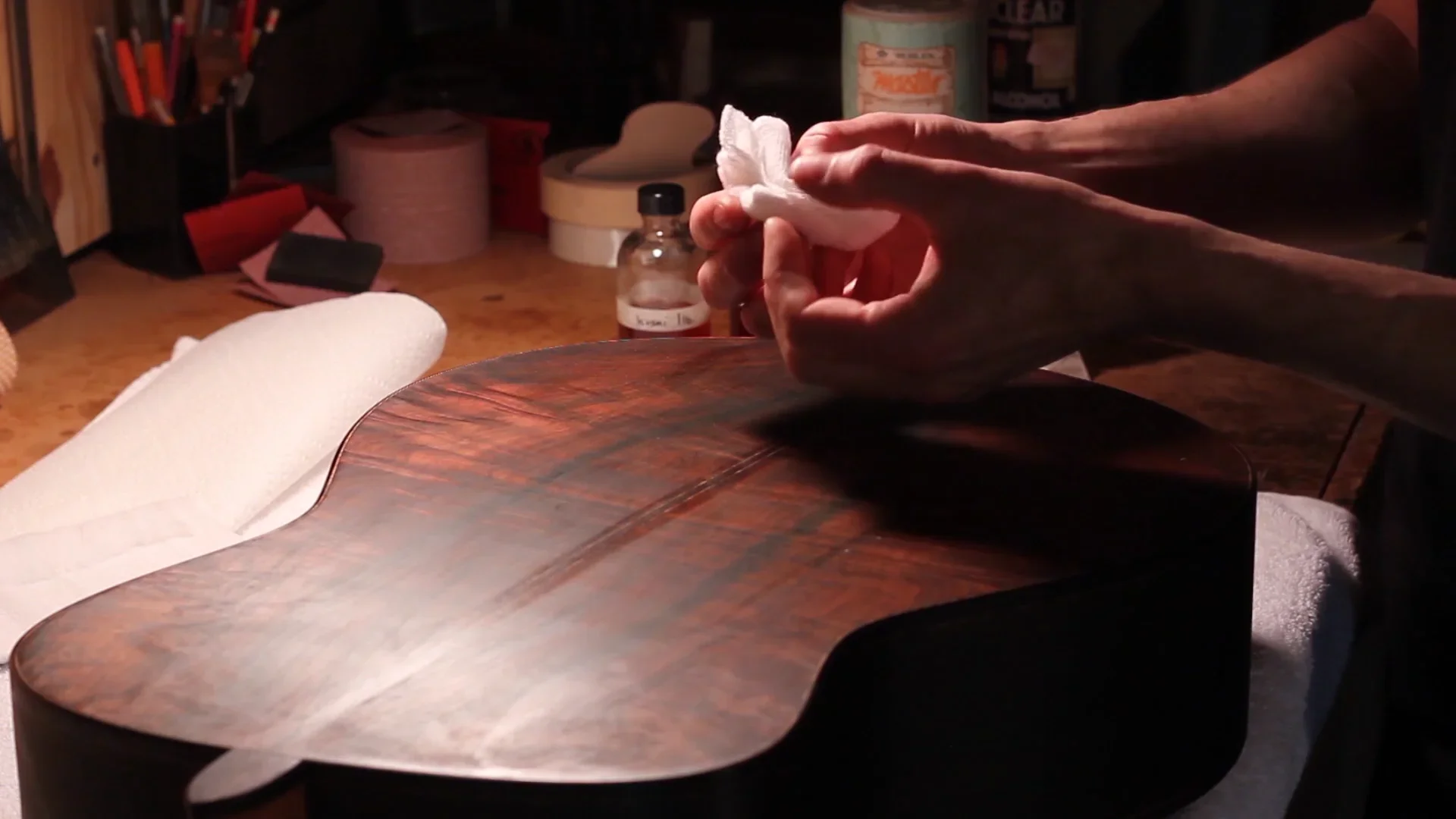
Oil finishes are also used where appropriate. These finishes enhance the natural character of the wood, offering a subtle and tactile surface while maintaining durability and ease of maintenance.
Both approaches reflect a preference for traditional craftsmanship over heavy synthetic coatings. The intention is always to protect the instrument while preserving its responsiveness and natural beauty.
The Final Word
Ultimately, wood selection is not about choosing from a catalogue, but about understanding how each material behaves and contributes to the whole instrument. By working directly with these woods in the workshop, students develop an appreciation for both their technical properties and their subtle character.
Every builder will respond differently to the look, feel, and tonal qualities of a particular wood, and this individual perspective is an important part of the process. We encourage students to explore these responses thoughtfully, guided by experience and practical understanding.
This balance between personal preference and informed craftsmanship forms the foundation of building instruments that are responsive, balanced, and enduring.